 CAMEROON NATIONAL
SHIPPERS' COUNCIL
CAMEROON NATIONAL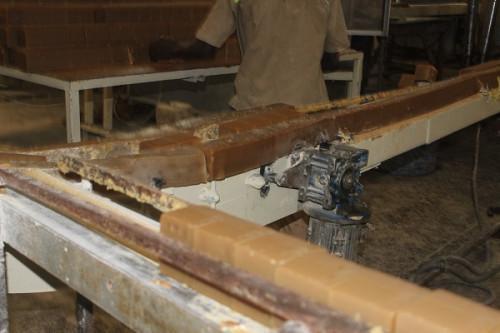
From 2019 to 2022, nations in the Economic Community of Central African States only captured 6.3% of Cameroon's exports, well below the 10% and nearly 35%, respectively, for Africa as a whole and the European Union. According to the Ministry of the Economy’s Competitiveness Committee, which provided these figures, "Cameroon should focus on generating (by stimulating regional markets) with neighboring countries, a dynamism that will trigger more active participation in world markets, particularly with the arrival of the African Continental Free Trade Area (AfCFTA)".
Preferential customs tariffs
However, despite the low level of trade between ECCAS countries and Cameroon, the report notes that a number of products from Cameroon are highly prized and “in strong demand” in the region. These include "zinc and zinc articles, which account for an average 36% of ECCAS import demand", while "cocoa and cocoa preparations account for an average 30%". Alongside these highly sought-after products, for which other countries clearly supply larger shipments than Cameroon, there are other Cameroonian products that "dominate ECCAS markets".
These include soaps (the only product for which Cameroon supplies more than 1% of Africa's import demand) and other laundry preparations, which account for 13% of ECCAS countries' import demand; vegetable preparations and fruit, which account for 10% of import demand; and wood, charcoal and wood products (around 7.5% of demand). Also on the Competitiveness Committee's list are cereal, flour, starch and milk preparations; pastries (around 4% of demand); and roots and tubers (around 3.7% of import demand).
As a reminder, to boost intra-community trade, the ECCAS has set up a preferential tariff regime, which allows companies that manufacture products made from at least 40% local raw materials to access the territories of this 11-state community free of customs duties (the DRC is reluctant to apply this regulation to soaps and vegetable oils from Cameroon, ed).
Thanks to this incentive scheme, 23 Cameroonian companies received approvals in 2016, authorizing them to export no fewer than 168 products to ECCAS countries duty-free. To date, according to reliable sources, 36 companies based in Cameroon can export 249 products duty-free to the 10 other ECCAS countries.
Source: Business in Cameroon

Latest News
The magic of Christmas at the Douala Maritime Museum
Today, 23 December 2023, was marked by the traditional Christmas tree party organised by the Douala Maritime Museum. The event saw more than 130 kids between the ages of 2 and 15 r...
Trade show: CNSC present at the National SME Days (JNPME)
At the invitation of the Ministry of Small and Medium-sized Enterprises, Social Economy and Handicrafts, the Cameroon National Shippers' Council (CNSC) took part as an exhibito...
Cameroon's trade dynamics in ECCAS: opportunities and challenges
From 2019 to 2022, nations in the Economic Community of Central African States only captured 6.3% of Cameroon's exports, well below the 10% and nearly 35%, respectively, for Af...
Cooperation: DRC’s Multimodal Freight Management Office seeks CNSC’s assistance
On the sidelines of the Steering Committee meeting of the Union of African Shippers' Councils (UASC) in Douala, a delegation from DR Congo's Multimodal Freight Management O...
ECTN: The CNSC shares its experience with the Nigerian Shippers' Council
The General Manager of the Cameroon National Shippers' Council (CNSC), Mr. Auguste Mbappe Penda, welcomed the Chief Executive Officer of the Nigerian Shippers' Council, Mr....
Delegation from the British High Commission visits the CNSC
The Cameroon National Shippers’ Council (CNSC) welcomed a delegation from the British High Commission in Cameroon on Wednesday 6 December 2023. This was at the CNSC he...